What are
Advertised Emissions?
Advertising is one of the world’s most powerful industries — touching nearly every human on the planet daily and shaping demand for products, services, and behaviours.
But with that influence comes responsibility. Advertised Emissions measure the uplift in greenhouse gas emissions (GHGs) driven by the increased sales that result from advertising. In other words, it accounts for the climate impact of the consumption advertising helps generate.
To take full responsibility for its climate footprint, the advertising industry must go beyond measuring its operational emissions. It must also account for — and reduce — the emissions created by the behaviours it drives. That’s the blind spot and it’s where the Advertised Emissions methodology comes in.
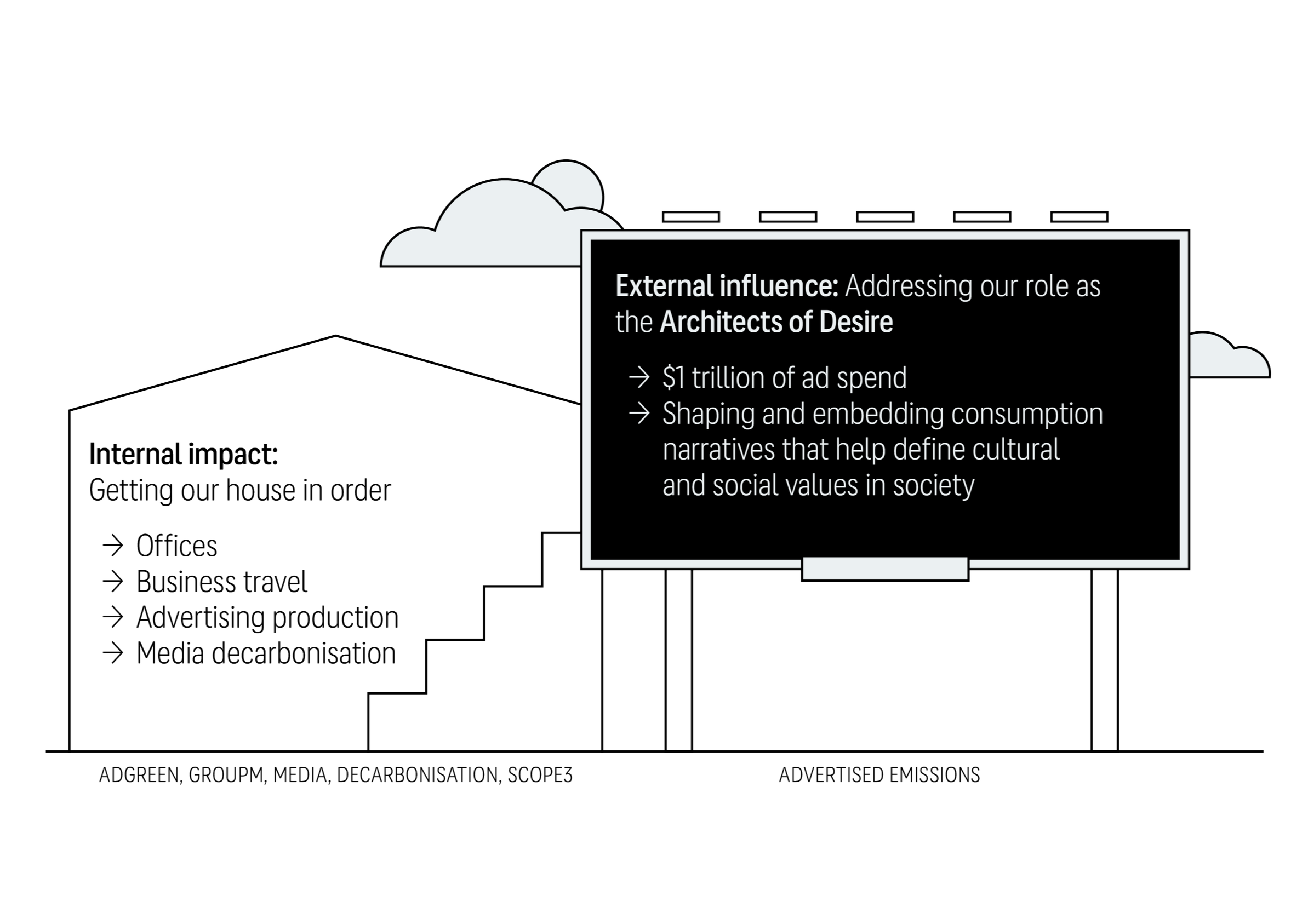
To stay within planetary boundaries, the advertising industry needs to widen the scope of its climate impact: from internal to external.
Advertised Emissions began as an idea: that the advertising industry was not accounting for the additional consumption it generates, and that this gap needed a name, a number, and ultimately a standard. Since we published our first report in 2021, we've been working to turn that idea into something the industry can actually use, and it has gained international traction.
That means moving from concept to calculation. From conversation to credible, repeatable methodology.
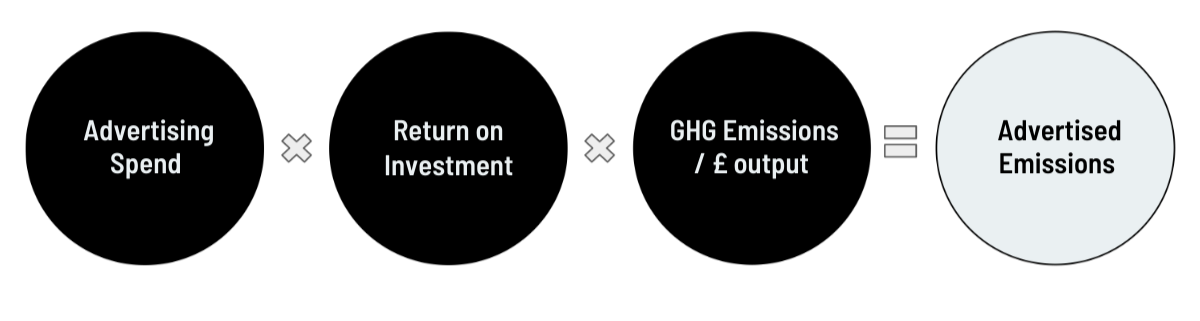
The methodology is simple. Multiple the amount spent on advertising multiplied by the return on investment multiplied by the GHG emissions per unit of output equals the Advertised Emissions that are the GHG emissions resulting from the uplift in sales generated by advertising.
How to measure Advertised Emissions
The concept of Advertised Emissions was first introduced by Purpose Disruptors at COP26 in 2021. It was inspired by the financial services industry developing the concept of ‘Financed Emissions.’
Identifying the blind spot was the first step. Now we are doing something about it.
Why Measure Advertised Emissions?
1
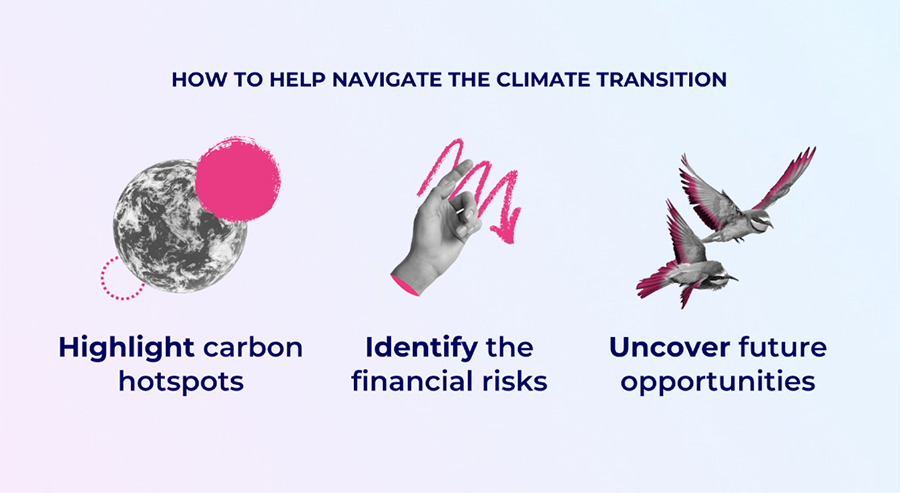
Spot Carbon Hotspots
Use Advertised Emissions to analyse your client portfolio and identify where change is needed — and what a sustainable future portfolio could look like.
2
Manage Financial Risk
Understand which high-emission clients might face regulatory, reputational, or market risk — and start planning a managed transition.
3
Find New Opportunities
Advertising can accelerate the shift to low-carbon alternatives. Measuring Advertised Emissions helps you identify where your influence can support people and the planet whilst considering long-term business stability.
The Path to Solving the Problem
In a Knowledge Transfer Partnership funded by UKRI Innovate UK, we are working with the University of Portsmouth to strengthen the academic rigour behind the Advertised Emissions methodology. This 30-month partnership brings independent research expertise into the development process, helping us build something that can stand up to scrutiny and ultimately be adopted as a global standard.
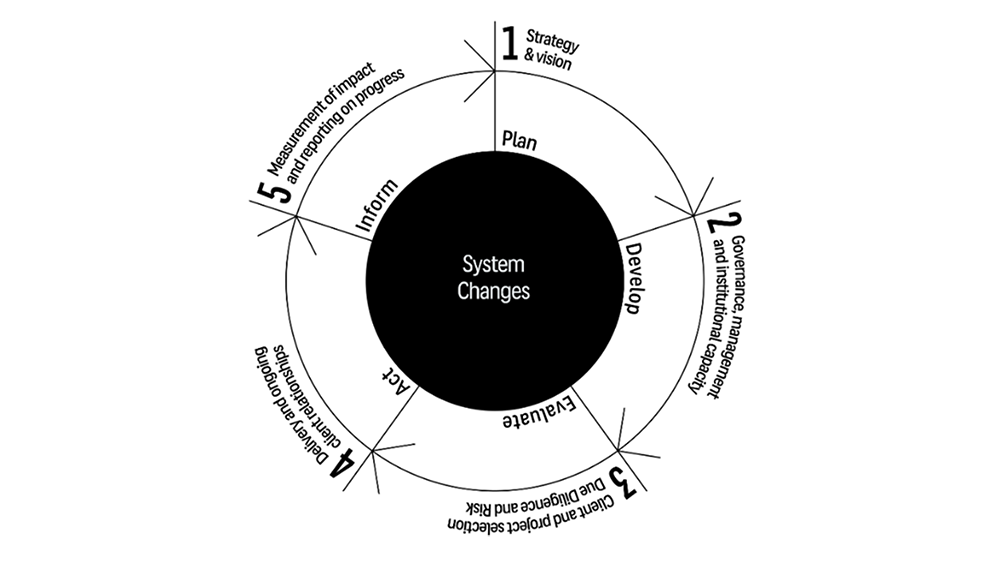
This kind of collaboration matters. The finance sector's Financed Emissions framework took years to move from early concept to the recognised standard it is today. We're following a similar path as developed by Thomas Hale: using the ‘conveyor belt’ approach to testing, learning, refining, and building the evidence base needed for Advertised Emissions to sit within the GHG Protocol and other major reporting frameworks.
The goal is a methodology that works for every type of advertising organisation, regardless of size or service, so the whole industry can get behind it.
Where we are now
We are currently working with our Advertised Emissions Working Group, which brings together network groups, independent agencies, media owners, management consultancies, and climate experts. Together, we're running qualitative and quantitative research to define scope, test calculations, and build the foundations for something that genuinely holds.
This work is aligned with Oxford Net Zero's Serviced Emissions framework and we are actively engaging with the GHG Protocol and ISO consultation processes to push for Advertised Emissions to be included in global reporting standards.
The numbers are not final. The methodology is not finished. But the direction is clear, and the work is real.
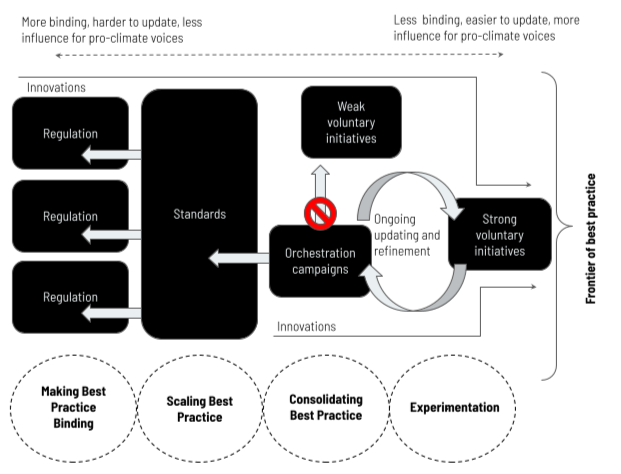
The Conveyor Belt framework for governing Net Zero as shown here, should be read right to left, and outlines how a system can run dynamically to push forward initiatives that emerge at the frontier of best practice, progressively scaling these initiatives and making them more binding.
Part of something bigger
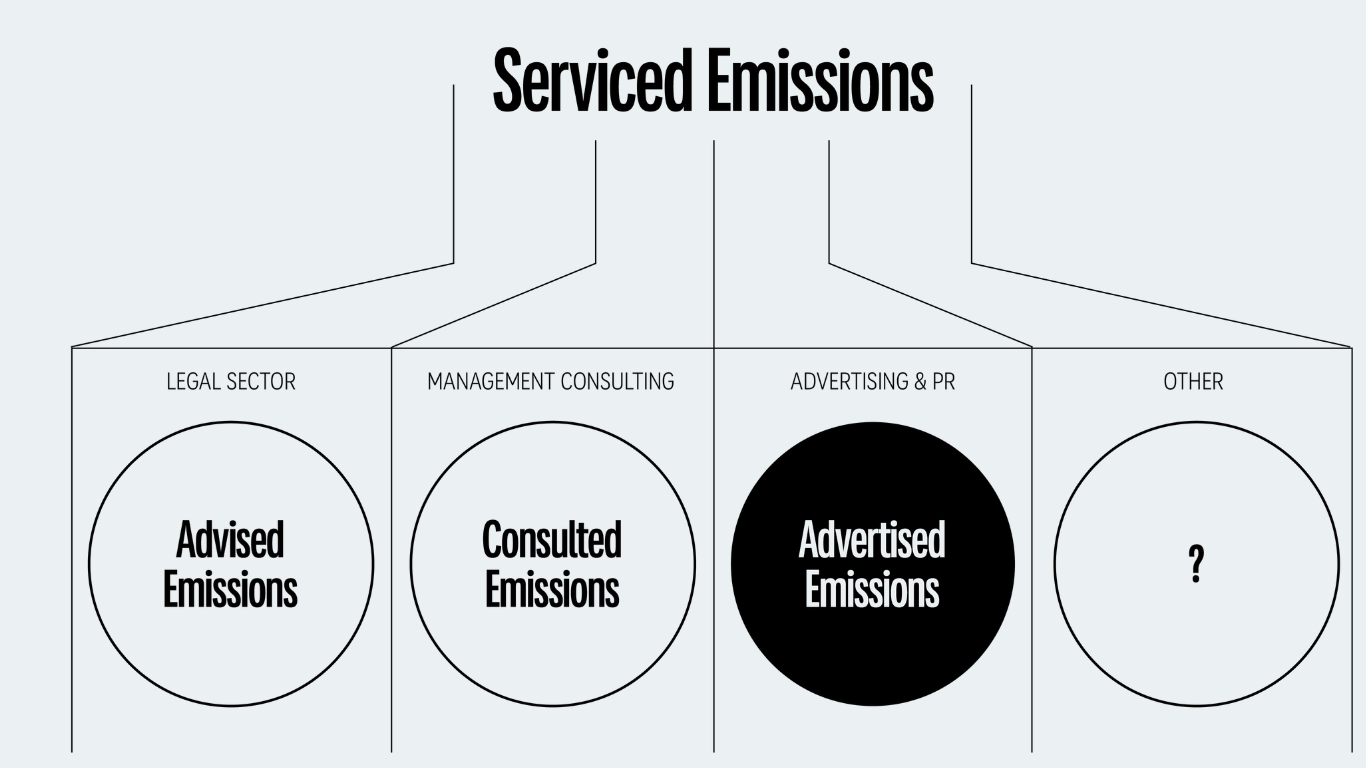
Advertised Emissions sits within a wider framework called Serviced Emissions: the GHG emissions arising from client activities that are informed or enabled by professional service providers. That means lawyers, consultants, PR firms and advertisers all carry a share of responsibility for what their advice makes possible.
This isn't an advertising-only conversation. The UN Race to Zero and Oxford Net Zero recognised that professional services are a critical force in the net-zero transition. Your peers in law and consulting are already moving. The question is whether advertising keeps pace.
Want to Get Involved?
If you’re ready to:
Measure...
your organisation’s Advertised Emissions
Join...
the Advertising Emissions working Group
Influence...
upwards, invite us to present to your executive team
Get in touch!
Advertised Emissions in the media
-
![]()
Why measuring our Advertised Emissions can help get ahead of inevitable climate pressures.
Advertising’s Evolutionary Moment is a new framework that helps the ad industry turn climate ambition into impact. Early adopters of the framework like OLIVER and M&C Saatchi are better able to align their services with climate goals, explains the Purpose Disruptors’ Aimee Brewerton.
WARC 17 Dec 2024 -
![]()
Why Advertised Emissions is a pivotal tool in the climate transition.
The TCFD framework, which aligns the impact of climate change with exposure to financial risk, will be mandatory in the UK from 2025 for all large private and listed companies. This takes the climate conversation directly to the boardroom, and advertisers can expect more scrutiny from investors, says the Purpose Disruptor’s Nadeen Ayyashi.
WARC 9 April 2024 -
![]()
How smart agencies are de-risking in uncertain times.
Responding to climate change is not a compliance exercise; it is a strategic lever of resilience. Agencies that integrate it into their governance, client strategies, briefing process and creative decision-making will be the ones to thrive in a rapidly changing marketplace, says Nadeen Ayyashi, Purpose Disruptors and Jennie Mossman, Amplify.
WARC 11 Dec 2025
-
![]()
Advertising adds extra 32% to annual carbon footprint of every person in the UK.
Latest research from Purpose Disruptors paints a stark picture of the C02 emissions caused as a result of advertising-driven consumption.
The Drum 7 Nov 2022 -
![]()
What are serviced emissions and how can corporates act on them?
EXCLUSIVE: The UN’s Race to Zero initiative held a launch event to showcase how organisations working in PR, law, advertising and other service-based sectors can identify actions to reduce emissions and mitigate climate risks.
edie 29 Oct 2024 -
![]()
Leading agency figures tell us which stories have been flying under the radar but are nonetheless shaping the year ahead.
Leading agency figures tell us which stories have been flying under the radar but are nonetheless shaping the year ahead.
The Drum 16 Jan 2026